Industry Spotlight Talks
December 4, 15:20-16:50
A Quarter-Century of Edge Computing: How it evolved and what the future holds
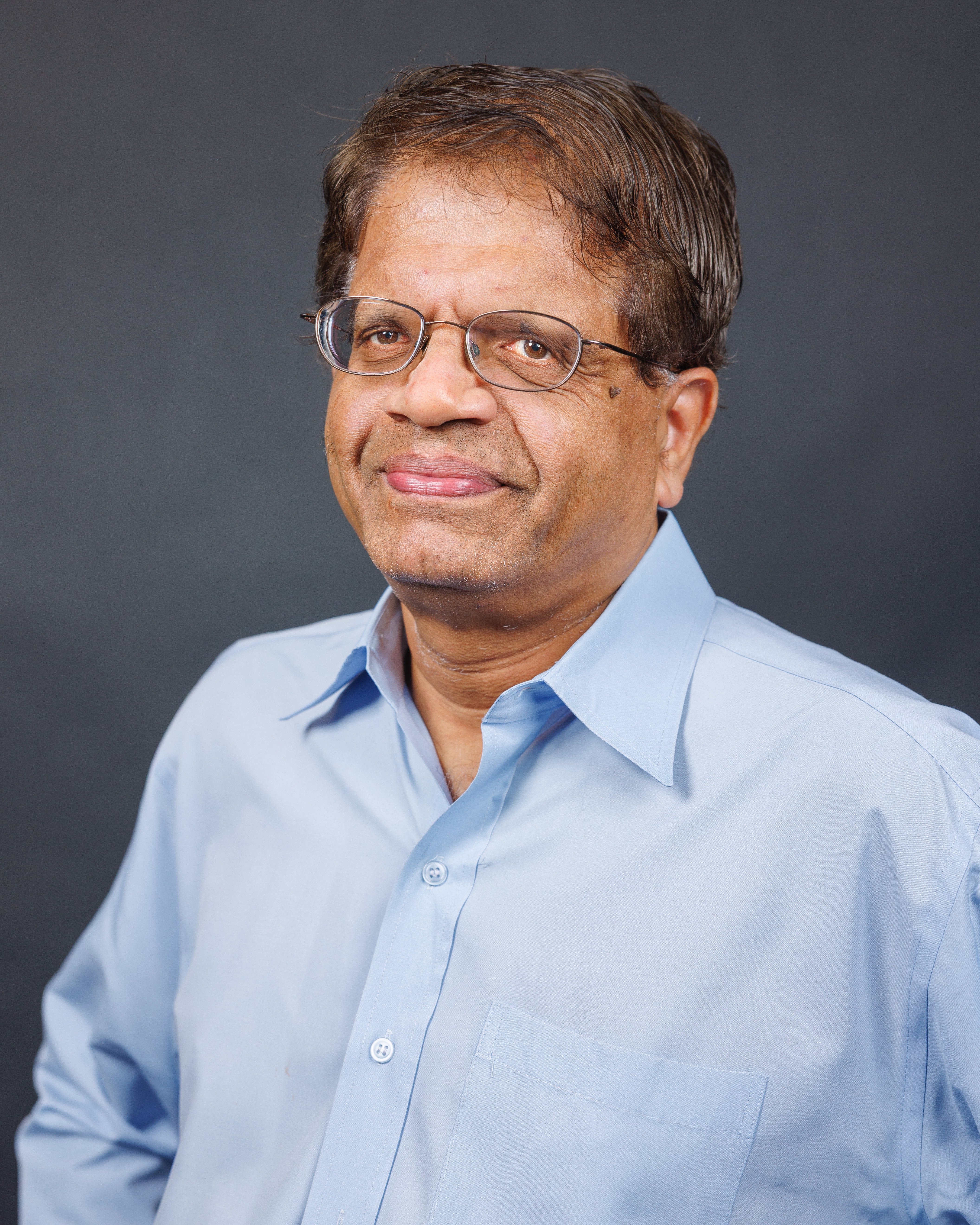
Ramesh K. Sitaraman
Akamai and University of Massachusetts at Amherst
Abstract: We discuss the evolution of four key paradigms of edge computing services: scripting on the edge, serverless functions on the edge, general-purpose applications on the edge, and edge AI. The last marks a transformative step of bringing ML-driven services closer to users and realizing the long-held dream of an intelligent, interactive internet. However, the exciting road to the future is rife with major unresolved scientific challenges of deploying edge computing at a scale and complexity never imagined before, requiring a tight collaboration between the research community and industry to bring the promise of edge computing to fruition.
Bio: Ramesh K. Sitaraman is currently a Distinguished University Professor and Associate Dean in the College of Information and Computer Sciences at the University of Massachusetts at Amherst. His research focuses on all aspects of Internet-scale distributed systems, including algorithms, architectures, performance, energy efficiency, security, and economics. He is best known for pioneering internet-scale services that currently deliver much of the world’s web content, streaming videos, and online applications. As a principal architect at Akamai, he helped create the world’s first major content delivery network (CDN) and the first edge computing service. He retains a role as Akamai’s Chief Consulting Scientist.
Prof. Sitaraman is a Fellow of the ACM, IEEE, and AAAS. He is a recipient of the inaugural ACM SIGCOMM Networking Systems Award for his work on the Akamai CDN, the ACM IMC Test-of-Time award for his work on video quality, an Excellence in DASH award for his work on the MPEG-DASH standard, and the IEEE William R. Bennett Prize for his work on adaptive bitrate (ABR) algorithms for video streaming that are widely used in practice. He is a recipient of the Distinguished Teaching Award (DTA), the highest teaching recognition on campus. He received a B. Tech. in electrical engineering from the Indian Institute of Technology, Madras, where he was named Distinguished Alumnus. He received a Ph.D. in computer science from Princeton University.